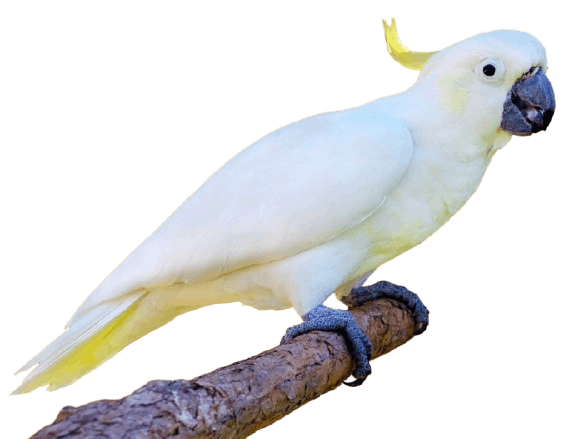
Cockatoo
Elegant & Devoted
Large
40–70 Years lifespan
300 g – 1.2 kg
30–60 cm
High Energy
Excellent Trainability
Large Parrot Group
White, pink, grey, black (varies by species)
Color/Pattern
Movable crest, loud call, strong beak
Special Traits
Sturdy, strong beak, crest-topped head
Body Type
Soft, powder-down plumage
Feather Type
Cockatoo Temperament & Nature
- Extremely affectionate and loyal
- Highly intelligent and curious
- Emotionally sensitive
- Social and attention-seeking
- Can be loud and expressive
Cockatoos thrive on companionship and do not do well with long periods of isolation.
Energy & Exercise Needs
Cockatoos require daily physical and mental engagement.
- Large cage with room to climb
- Daily supervised out-of-cage time
- Chew toys and enrichment activities
- Social interaction every day
- Training sessions for mental stimulation
Without stimulation, they may develop destructive behaviors.
🎾 Best toys for Cockatoo
Diet & Nutrition Guide
A varied and balanced diet is essential.
- High-quality parrot pellets
- Fresh vegetables and fruits
- Limited seeds
- Occasional healthy nuts
- Clean water daily
Proper nutrition supports feather health, immunity, and longevity.
🍽️ Recommended food for Cockatoo
Aquarium Care Tips
- Regular misting or bathing
- Routine nail trimming
- Clean cage daily
- Provide safe chewing materials
- Avoid smoke and strong household fumes
Their powder-down feathers require consistent hygiene to reduce dust buildup.
Cockatoo Health Guide by Age
Juvenile (0–2 Years)
- Early socialization
- Balanced growth diet
- Basic training and bonding
Adult (3–40 Years)
- Daily enrichment
- Annual vet checkups
- Weight and feather monitoring
Senior (40+ Years)
- Softer food if needed
- Joint health monitoring
- More frequent veterinary visits
🩺 Nearby vets for Cockatoo owners
Exotic & Companion Bird Specialist
Monday to Saturday
Mumbai, Maharashtra
₹900 – ₹1,500 per consultation