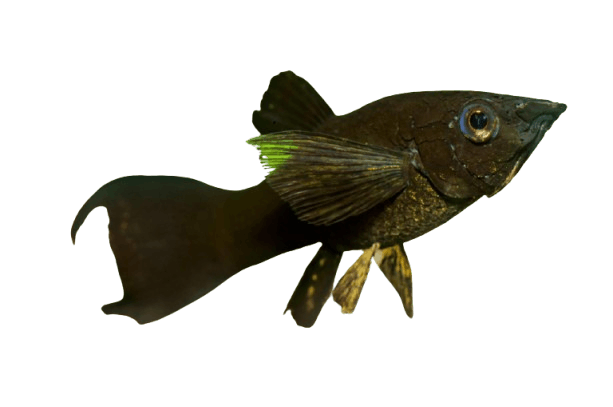
Molly Fish
Active & Social
Medium
3–5 Years lifespan
1–3 grams
5–10 cm
Moderate to High Energy
Freshwater livebearer Group
Minimum 40 liters (for small group)
Beginner-Friendly
Black, white, orange, silver, dalmatian, gold
Color/Pattern
Live-bearing reproduction, adaptable to various water conditions
Special Traits
Elongated body with rounded or sail-like dorsal fin
Body Type
Smooth and glossy
Scale Type
Molly Fish Temperament & Nature
- Peaceful and social
- Best kept in small groups (1 male to 2–3 females recommended)
- Active swimmers
- Compatible with other peaceful community fish
- Males may show mild dominance behavior
Mollies are excellent additions to community tanks.
Energy & Exercise Needs
- Water temperature: 24–28°C
- Slightly alkaline pH (7.5–8.5 preferred)
- Moderate filtration
- Planted aquarium with hiding spaces
- Open swimming area
They enjoy both swimming space and plant cover.
🎾 Best toys for Molly Fish
Diet & Nutrition Guide
- High-quality flakes or pellets
- Vegetable-based foods (spirulina, blanched spinach)
- Occasional live/frozen food (brine shrimp, bloodworms)
- Feed 1–2 times daily in small portions
Mollies require some plant-based food in their diet for optimal health.
🍽️ Recommended food for Molly Fish
Aquarium Care Tips
- Weekly 25–30% water change
- Maintain stable pH and hardness
- Avoid overcrowding
- Provide hiding spots for fry
- Monitor water quality regularly
Stable water parameters help prevent common molly diseases.
Molly Fish Health Guide by Age
Fry (0–2 Months)
- Feed crushed flakes or baby brine shrimp
- Provide plant cover
- Maintain warm water
Adult (2 Months–3 Years)
- Balanced diet with vegetable content
- Observe breeding behavior
- Maintain consistent water conditions
Senior (3+ Years)
- Softer foods if needed
- Monitor swimming activity
- Extra attention to water quality
🩺 Nearby vets for Molly Fish owners
Ornamental Fish Nutrition & Preventive Care
Monday - Saturday
Ahmedabad, Gujarat
₹700 – ₹1,200 per consultation