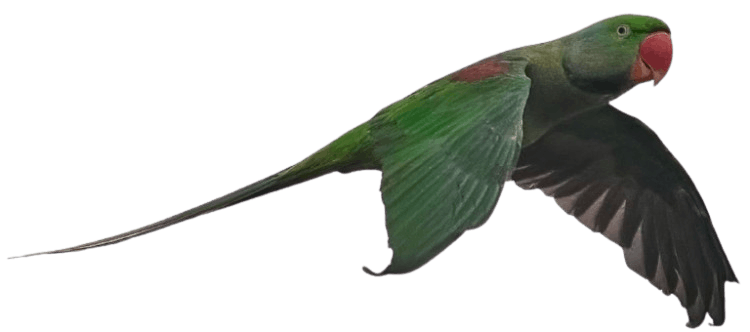
Alexandrine Parakeet
Elegant & Powerful
Large
25–30 Years lifespan
200–300 grams
55–62 cm (including long tail)
High Energy
Excellent Trainability
Large Parakeet Group
Green body with red shoulder patch, males have neck ring
Color/Pattern
Strong beak, talking ability, impressive wingspan
Special Traits
Slender, strong, long-tailed
Body Type
Smooth, vibrant plumage
Feather Type
Alexandrine Parakeet Temperament & Nature
- Intelligent and observant
- Confident and bold
- Loyal to primary caregiver
- Playful but strong-willed
- Vocal and expressive
Alexandrine Parakeets require firm but positive training. They respond best to patience, consistency, and daily interaction.
Energy & Exercise Needs
This dynamic species requires significant mental and physical stimulation.
- Large cage with climbing space
- Supervised out-of-cage time
- Chew toys (strong beak requires durable toys)
- Daily social interaction
Without stimulation, they may become bored or destructive.
🎾 Best toys for Alexandrine Parakeet
Diet & Nutrition Guide
Proper nutrition is essential for their long lifespan.
- High-quality pellets
- Fresh vegetables (leafy greens, carrots, peas)
- Limited fruits
- Nuts in moderation
- Clean, fresh water daily
A varied diet supports feather quality and immune health.
🍽️ Recommended food for Alexandrine Parakeet
Aquarium Care Tips
- Weekly cage deep cleaning
- Daily food and water replacement
- Provide bathing opportunities
- Trim nails if necessary
- Ensure mental enrichment
Because of their strength and intelligence, enrichment is not optional—it is essential.
Alexandrine Parakeet Health Guide by Age
Chick (0–6 Months)
- Balanced growth diet
- Warm, secure enclosure
- Gentle early socialization
- Basic training introduction
Adult (6 Months–20 Years)
- Structured routine
- Balanced nutrition
- Daily exercise
- Annual avian vet checkups
Senior (20+ Years)
- Softer foods if required
- Monitor weight and mobility
- Regular health screenings
- Stress-free environment